28 October 2026 | Articles, Articles 2026, Communications, Marketing | By Christophe Lachnitt
When Brands Let AI Agents Speak For Them, Who Keeps Their Promises?
How much autonomy will brands give their customer service agents, and what will the consequences be?
As is often the case with artificial intelligence, brands are gaining new ways to deliver on their promises while exposing themselves to unprecedented risks.
In this respect, conversational AI agents can operate at three distinct levels:
- They speak on behalf of the brand: They can explain a product or service, answer questions, handle complaints, or offer advice. In doing so, they put the brand’s credibility on the line.
- They make commitments on behalf of the brand: They can offer refunds, discounts, or delivery timelines. In doing so, they expose the brand to liability.
- They act on behalf of the brand: They can complete transactions, modify reservations, or activate services. In doing so, they shape the quality of the brand experience.
With AI, brand consistency therefore no longer depends solely on a company’s communications and employees, but also on what it allows its agents to say, promise, and do. Governing the behavior of these systems is consequently becoming a critical issue for communications and marketing.
A recent incident illustrates this shift. In June 2026, Zack Giacomelli wanted to sell his car to a BMW dealership in Toronto. He exchanged text messages with a representative named Quinn, who offered him more than CAD 27,000 for the vehicle. The amount matched the outstanding balance on his auto loan exactly. As it turned out, Quinn was an AI agent that had mishandled the transaction. A salesperson – human, this time – informed Zack that Quinn’s offer was incorrect and that the dealership was actually willing to pay only CAD 20,000. The original offer was ultimately reinstated after Canadian broadcaster CBC News reported on the incident. The customer got his way without having to go to court, as the dealership made a sensible trade-off between protecting its reputation and absorbing a CAD 7,000 price difference. According to the dealership, the incident stemmed from a human error that caused the chatbot to mistake the outstanding loan balance for the proposed purchase price. Furthermore, the system was not supposed to negotiate autonomously, but merely communicate offers prepared by employees. The problem, therefore, was not an AI hallucination – the tendency of such systems to generate fabricated information and present it as fact.
Another customer of a Canadian company, however, had to turn to the courts to obtain compensation. In February 2024, British Columbia’s Civil Resolution Tribunal ordered Air Canada to compensate a passenger who had relied on information provided by its chatbot. Following a death in his family, the customer wanted to take advantage of a bereavement fare. The agent told him he could purchase a ticket at the regular price and then apply retroactively for the discounted fare. In reality, Air Canada’s fare rules did not allow this. During the proceedings, the airline made the rather astonishing argument that its chatbot was a separate entity responsible for its own responses. The tribunal rightly rejected this extraordinary exercise in anthropomorphism, finding that the Company was responsible for information published on its website, even when that information came from a chatbot.
Beyond the different approaches taken by these two Canadian companies, both incidents demonstrate that a chatbot does not need to complete a transaction to put a brand’s reputation and liability at stake: Inaccurate commercial information alone can be enough. Comparing the two cases also reveals that perceived responsibility can have reputational consequences regardless of how legal liability is ultimately determined.
Yet, conversational agents are not merely a source of risk. They will increasingly give brands unprecedented opportunities to deliver on their promises. Available around the clock, they can provide immediate answers to customers, tailor their advice to each individual’s circumstances, simplify customer journeys, solve problems, and maintain continuity across multiple channels. By handling routine requests at scale, they also free up human teams to focus on the most sensitive situations.
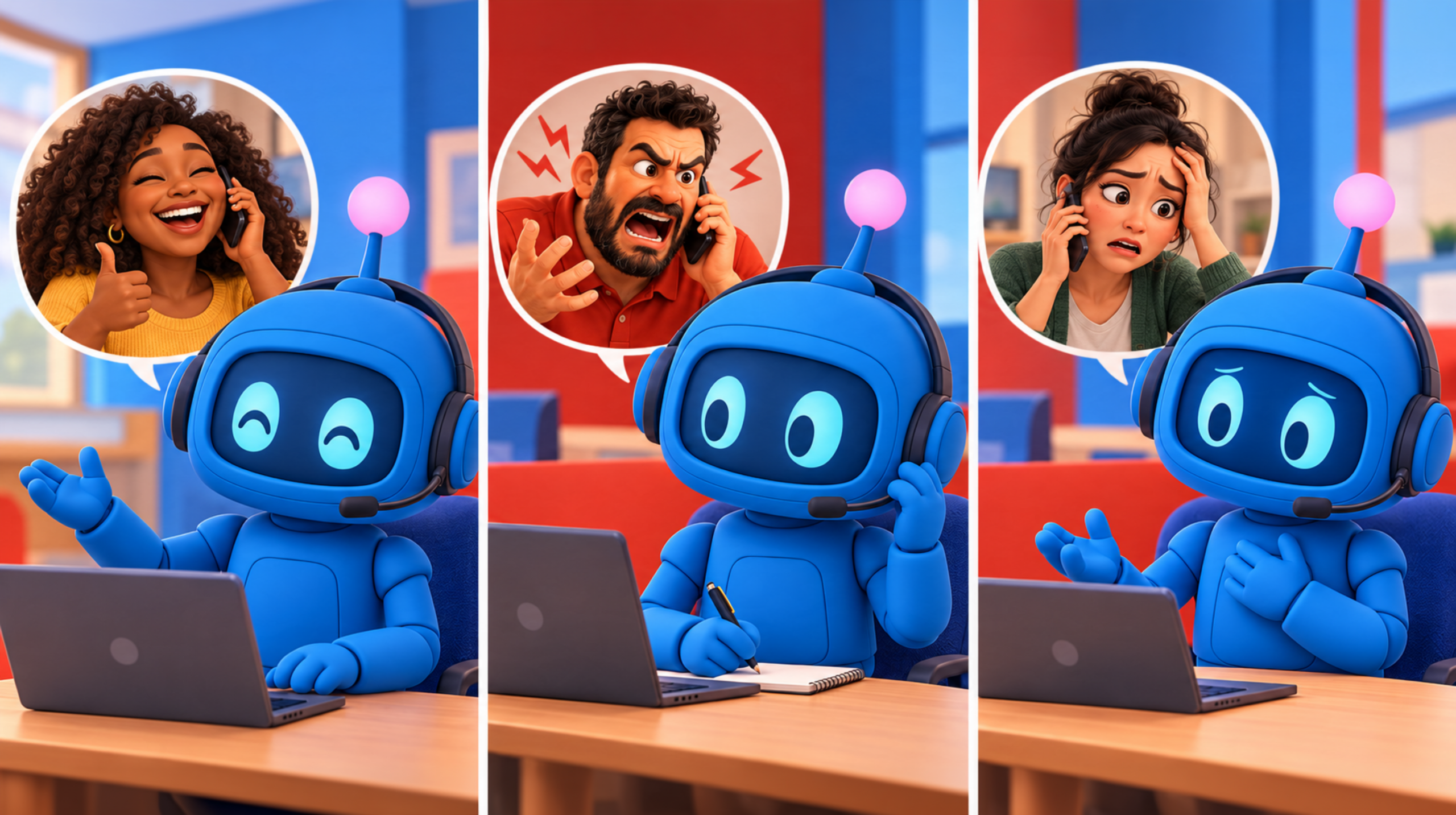
Image created with ChatGPT and Midjourney – (CC) Christophe Lachnitt
In this context, the approach taken by footwear brand Crocs is particularly instructive. The Company has treated the governance of its AI agent Rivet’s personality and behavior as an integral part of its brand identity. Rivet is designed to assist consumers throughout their journey, from product discovery to order tracking and after-sales support. Guardrails help prevent inappropriate shifts in tone, ensuring that Rivet communicates in a way that remains true to Crocs’ identity. The Company therefore monitors not only what its agent says, but also how it says it. After all, an algorithmic representative embodies a brand’s essence just as much as a human salesperson does.
Going forward, brands will need to follow Crocs’ example and consider what attitudes they want their conversational agents to adopt, particularly during negotiations, whether they are interacting with other agents or with humans. Should they systematically maximize the company’s immediate financial interests or prioritize long-term customer relationships? Should they apply policies uniformly or have the discretion to recognize exceptional circumstances? Even when dealing with human employees, brands adopt widely differing approaches to these questions. Perhaps the most striking example is Ritz-Carlton, whose renowned customer service philosophy has included empowering each employee to spend up to $2,000 to satisfy a dissatisfied guest.
Even without granting AI agents that degree of autonomy, governing their behavior will become increasingly important. Research conducted at American universities has found that, under certain circumstances, customers hold a company more responsible for a service failure caused by a robot than for an identical mistake made by a human employee. The most revealing finding concerns the reason for this difference: When a robot makes a mistake, customers blame the company because they do not perceive the robot as being in control of its own actions. When a human employee makes the same mistake, they tend to blame the individual rather than the employer. By delegating their actions to robots, companies may therefore find themselves bearing an even greater share of the criticism when something goes wrong.
Conversely, informing customers at the outset that they are interacting with a chatbot can make them more tolerant of its potential shortcomings. Since August 2026, this type of transparency has also been required in Europe under the EU Artificial Intelligence Act (AI Act). Nevertheless, agent governance is lagging behind deployment. A McKinsey survey shows that, although companies are making progress in responsible AI, only 32% have reached a high level of maturity in governing AI agents.
This is where Marketing and Communications should step in.
Both functions help shape a brand’s identity, narrative, promises, messaging, and customer touchpoints. The imperative of aligning what a brand says with what it does must now extend to the role AI agents play in customer relationships – especially given the distinctive risks associated with the sheer volume of interactions they can automate. In this environment, can a brand still meet the expectations of all its stakeholders while consistently expressing what makes it unique? How, in particular, can companies harness AI’s virtually limitless capacity for personalization to delight individual customers without compromising the fundamentals of their brand? How can they prevent personalization from producing as many different versions of the brand as there are automated interactions? It is easy to imagine situations in which following established procedures could contradict a brand promise, or vice versa. As always – but even more so with algorithmic systems – the challenge lies in translating broad principles into specific decisions.
As AI agents become more widespread, governing how a brand expresses itself is therefore converging with governing the experiences it delivers. For Communications and Marketing, this would mean (i) translating the company’s values and promises into actionable behavioral principles that technical teams can incorporate into agent configurations, (ii) helping define which situations should be handled by AI agents and which should remain the responsibility of humans, (iii) contributing to evaluation scenarios that test agents’ responses and behavior, and (iv) identifying and correcting gaps between brand promises and the experiences agents actually deliver to their audiences1. This evolution should bring Communications and Marketing into even closer alignment.
As these reflections illustrate, a brand’s reputation cannot be programmed like software. Yet, some of the behaviors that shape it will now have to be encoded. This is one of the central challenges of governing AI customer service agents.
—
1 Through the analysis of anonymized conversations.
Superception is a media outlet focused on perception issues across communication, management, and marketing in the age of artificial intelligence. It features a blog, a newsletter, and a podcast. It was founded and is published by Christophe Lachnitt.
Read on same subject